
Archive article: This is an English translation of the source article dated 2024. Prices, promotions, statistics and specifications reflect the source period. Please contact us for a current quotation.
Beyazlı Group manufactures VESS concrete batching plants of different capacities with their associated equipment.
Beyazlı Group manufactures VESS concrete batching plants of different capacities with their associated equipment.
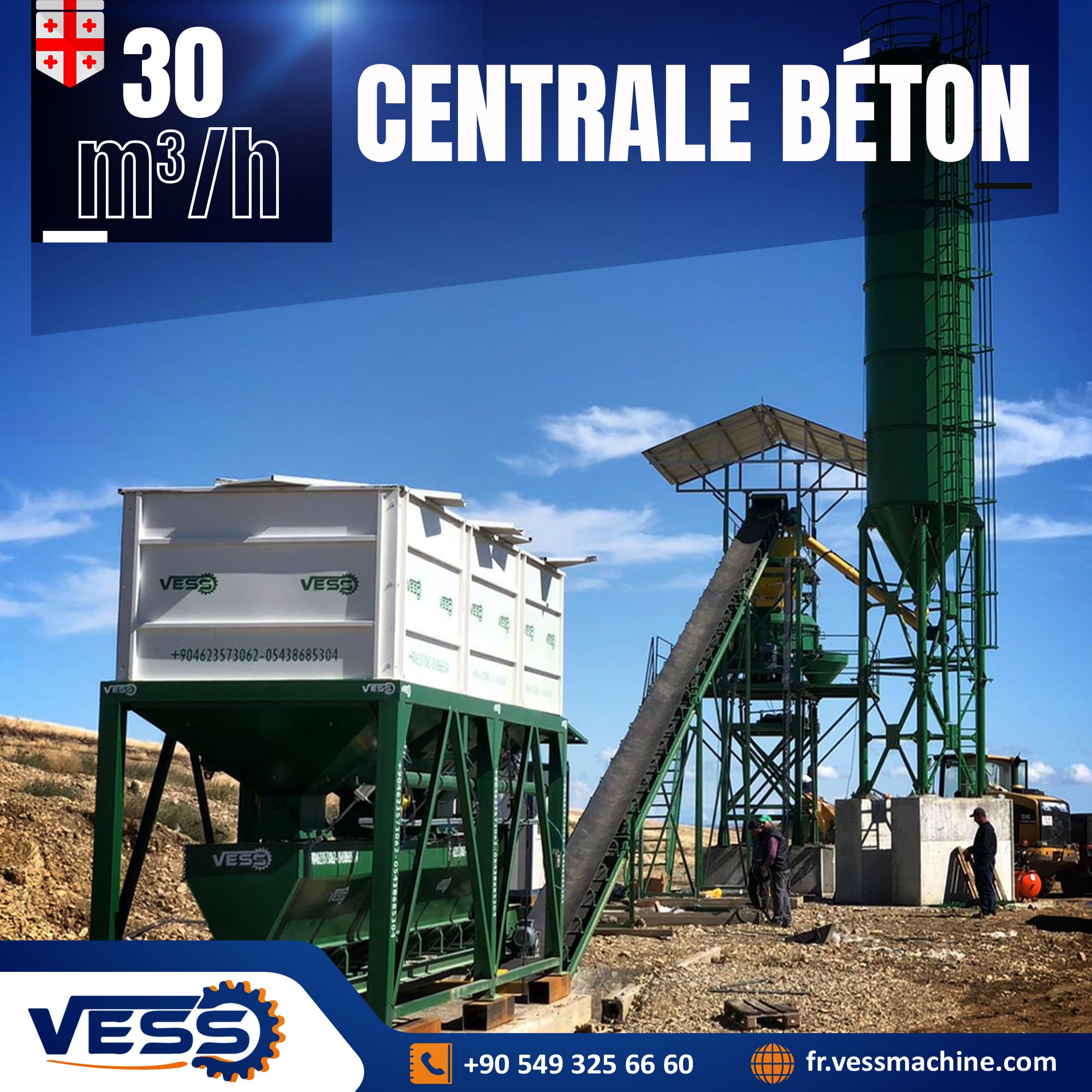
Beyazlı Group is an industrial company in Trabzon, Turkey, and a leader in brick machines and concrete batching plants. Our machines and plants have a 2-year warranty and 5 years of service. Installation and commissioning are free.
We work for customer satisfaction, improving our machines each year in response to feedback and difficulties customers have experienced.
What Is a Concrete Batching Plant?
A concrete batching plant, also known as a concrete mixing plant, is an industrial facility that produces large volumes of concrete efficiently and under controlled conditions. These plants commonly supply ready-mix concrete for construction sites.
A concrete mixer is a device that uniformly combines materials such as cement, sand or gravel and water to make concrete.
Concrete Batching Plant Equipment
Concrete batching plants efficiently produce large quantities of concrete under controlled conditions. Common equipment includes:
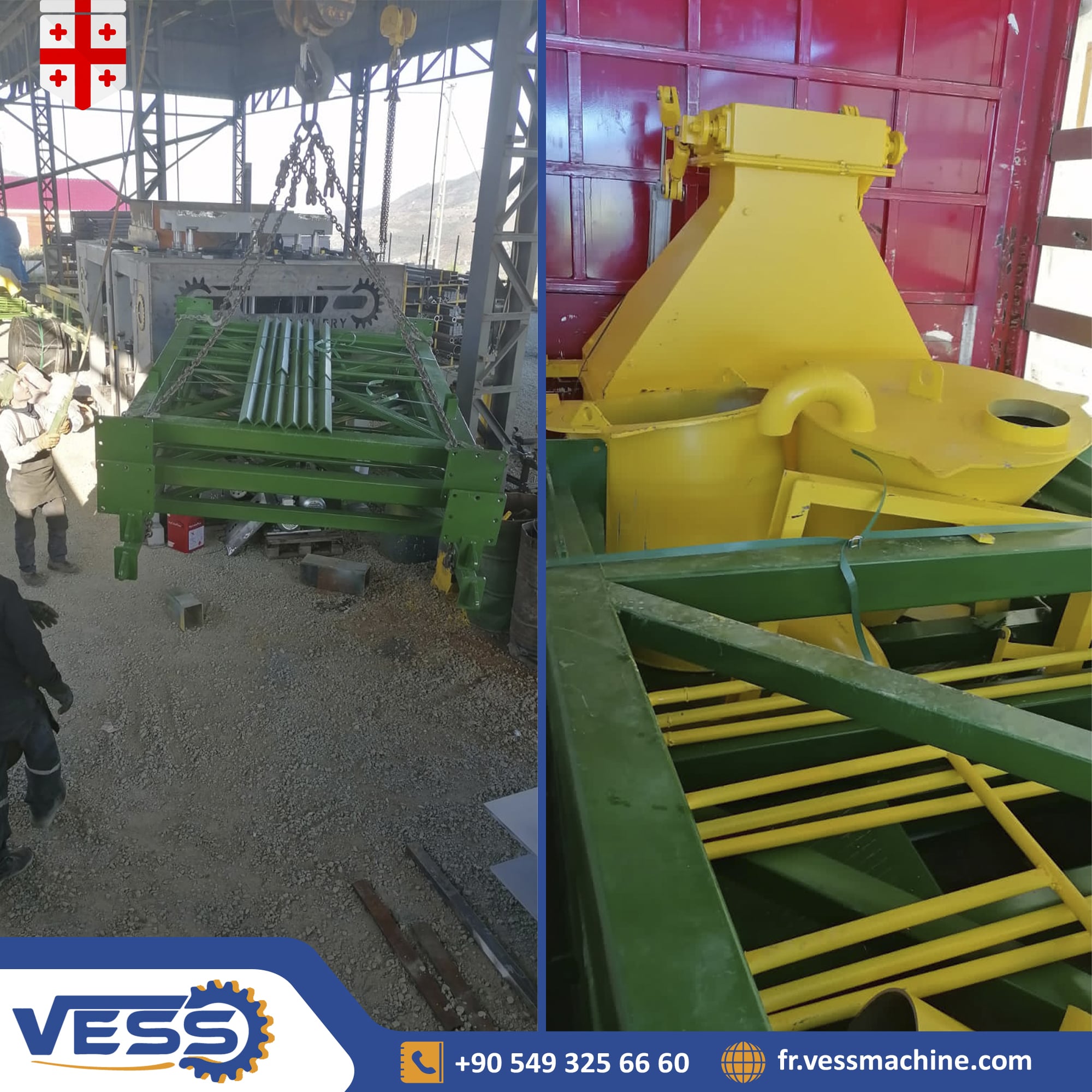
- Aggregate storage hoppers: materials such as sand, gravel and other aggregates are stored separately before dosing and mixing.
- Aggregate weighing system: precise weighing systems measure the aggregate needed for each concrete batch.
- Cement hopper: cement is stored separately, usually with a weighing system measuring the exact quantity needed.
- Cement weighing system: precisely measures the cement required for each batch of concrete.
- Water dosing system: accurately adds the correct quantity of water to each batch.
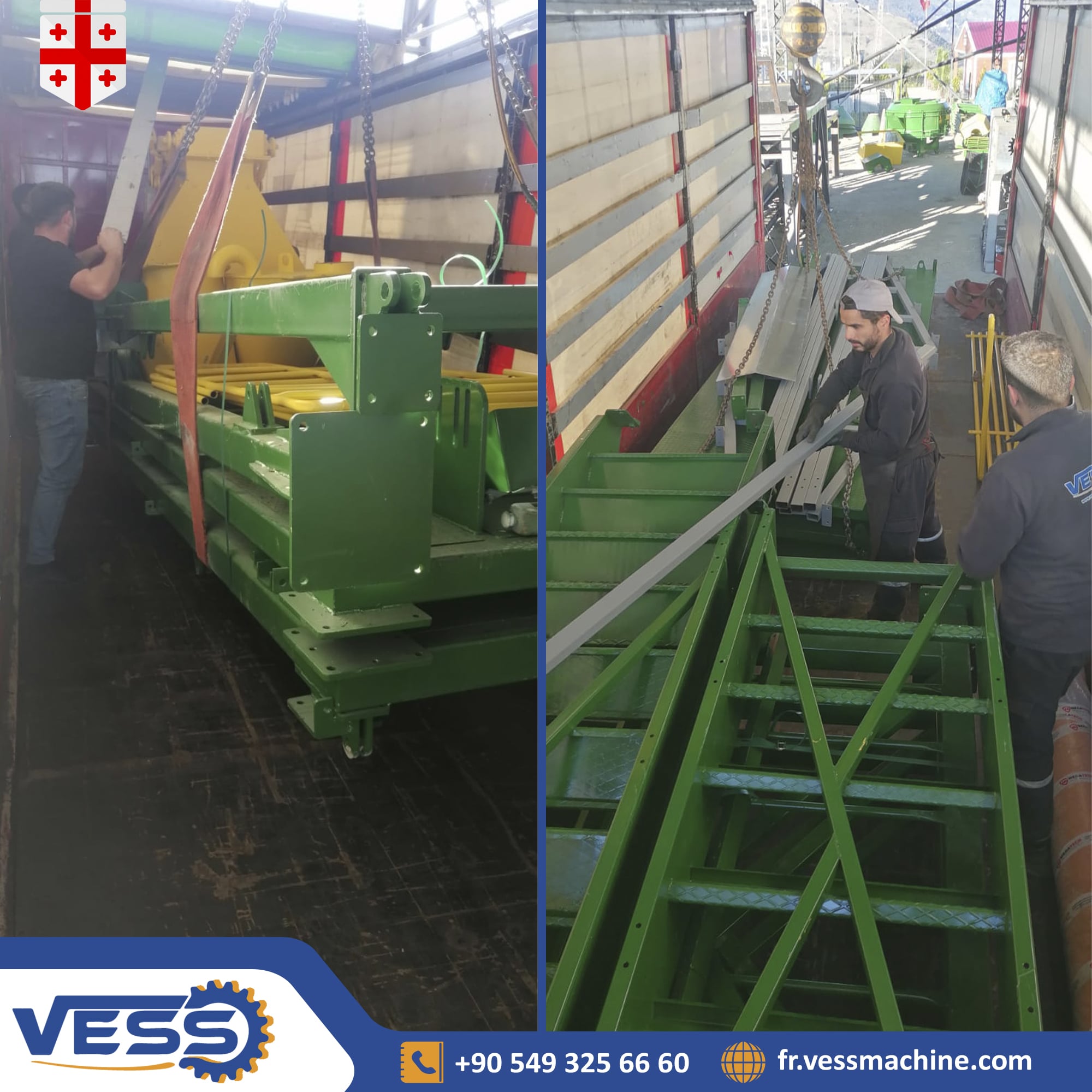
- Concrete mixer: the plant’s central component, combining aggregates, cement, water and any admixtures to produce concrete.
- Conveying system: conveyor systems move components such as aggregates and cement from the hoppers to the concrete mixer.
- Automated control system: modern concrete batching plants generally use automated controls to monitor and regulate mixing and ensure concrete quality.
- Cement storage silos: high-output plants may have additional silos for cement storage.
- Admixtures: equipment can add setting retarders, accelerators, plasticizers and other admixtures to the mixture.
- Environmental control system: some plants have filtration systems to reduce dust emissions and comply with environmental standards.
 |
 |
VESS Stationary Concrete Batching Plants
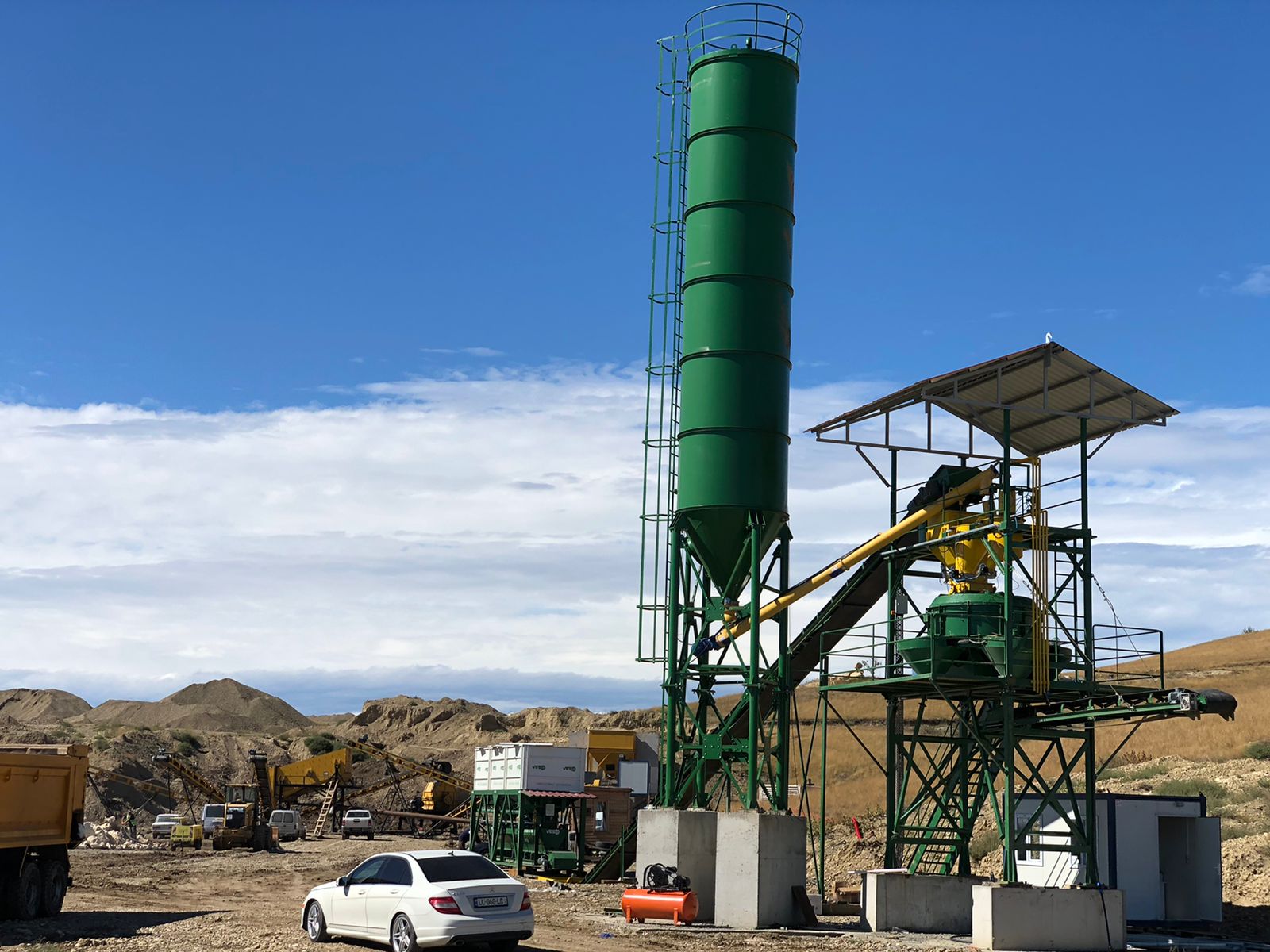
Beyazlı Group manufactures VESS concrete batching plants in several capacities. VESS plants are stationary.
Stationary concrete batching plants supply large quantities of concrete to construction sites. This type of plant does not require a dedicated on-site material storage area, reducing the risk of deterioration. Factory-type stationary plants also produce quality concrete meeting specifications without material dosing errors. They perform various material quality checks throughout production.
What is a mixer?
A mixer is a device used to mix or agitate substances, generally when preparing materials such as concrete or chemicals. It combines ingredients uniformly by stirring or agitation. Mixers vary in size and complexity according to their use, from small kitchen mixers to large industrial construction mixers.
What Is an Aggregate Hopper?
An aggregate hopper is equipment used in construction, particularly concrete production. Usually funnel-shaped, it enables controlled discharge of materials such as sand, gravel or other aggregates into a specified area.
What is a conveyor?
A conveyor moves the materials needed for concrete production within the plant. It may use a belt, screw or another mechanism to transfer raw materials from storage to the central mixer. These conveying systems automate production by maintaining a continuous, efficient supply of ingredients.
 |
 |
How a Concrete Batching Plant Works
A concrete batching plant operates automatically. A control cabinet manages weighing, material transport, concrete moisture and flowability measurements, mixing and other stages.
Each concrete type has a predetermined formula and an associated program. The operator simply starts the program corresponding to the customer’s order: the selected concrete type and quantity.
Stages of concrete preparation at a batching plant:
- Aggregate preparation and transport: aggregates are added to the mixer first. A skip carries them from the silo to a dosing container. At this stage, they may also be screened to retain only the finer particles.
- Transfer of other concrete ingredients: the remaining materials move from their tanks into holding hoppers by belts or pumps, or directly into the mixer after the aggregates, in this order: cement, water, then admixtures.
Preset programs ensure precise quantities. Mixing water comes from water-treatment reserves, rivers or lakes.
- Mixing concrete ingredients: mixing lasts for a specified time according to the concrete type and quantity required. Mixer volume also affects the duration. Average output is estimated at 60 m³/h for a 1,000-liter mixer.
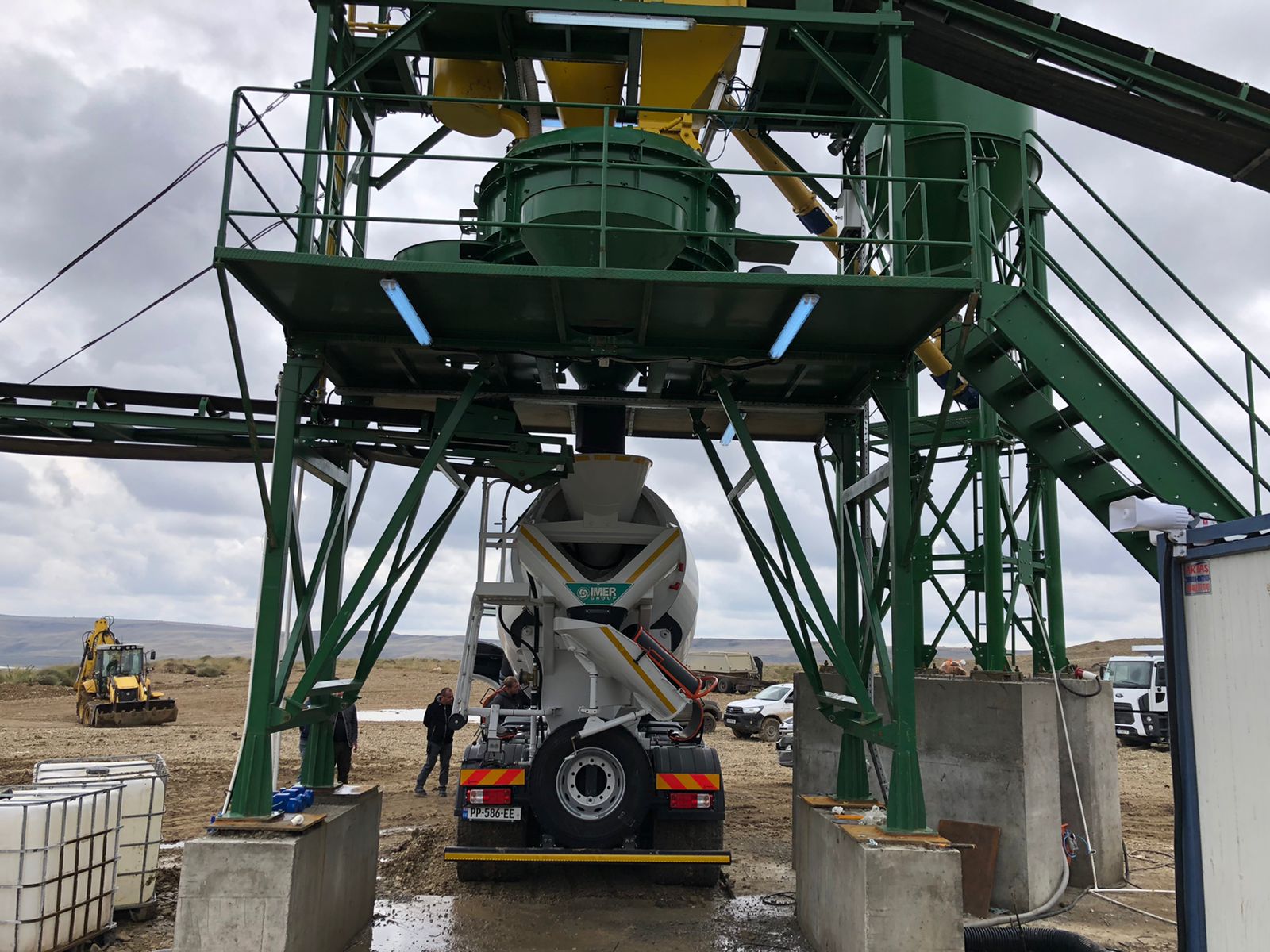
- Loading concrete for delivery: the finished concrete is discharged into a truck mixer, mixer-pump truck or conveyor truck according to site access. It is then ready for delivery.
- Concrete returning to the plant: residual concrete in the truck drum is removed when the mixer is cleaned in a designated area. Remaining water and concrete pass through several settling tanks until filtered water is obtained for subsequent recycling.
Share a question, add your experience, or continue the discussion about this topic.