
Archive article: This is an English translation of the source article dated 2024. Prices, promotions, statistics and specifications reflect the source period. Please contact us for a current quotation.
VESS concrete batching plants in several capacities
VESS concrete batching plants in several capacities
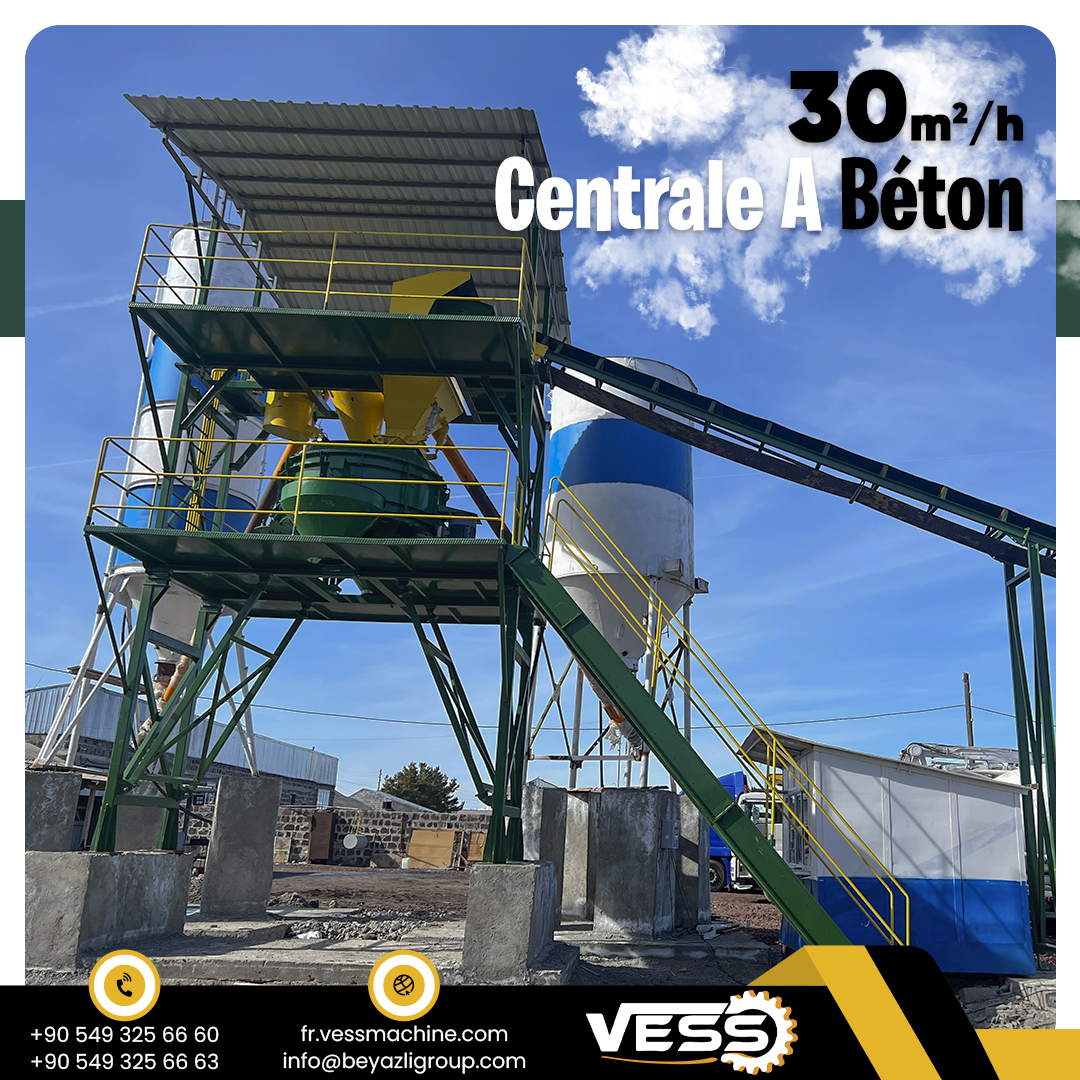
Beyazlı Group is an industrial company in Trabzon, Turkey, and a leader in new concrete batching plants and concrete brick, block and paving machines. Our machines have a 2-year warranty and 5 years of service. Installation and commissioning are free.
We work for customer satisfaction, improving our machines each year in response to feedback and difficulties customers have experienced.
VESS Concrete Batching Plant in Turkey
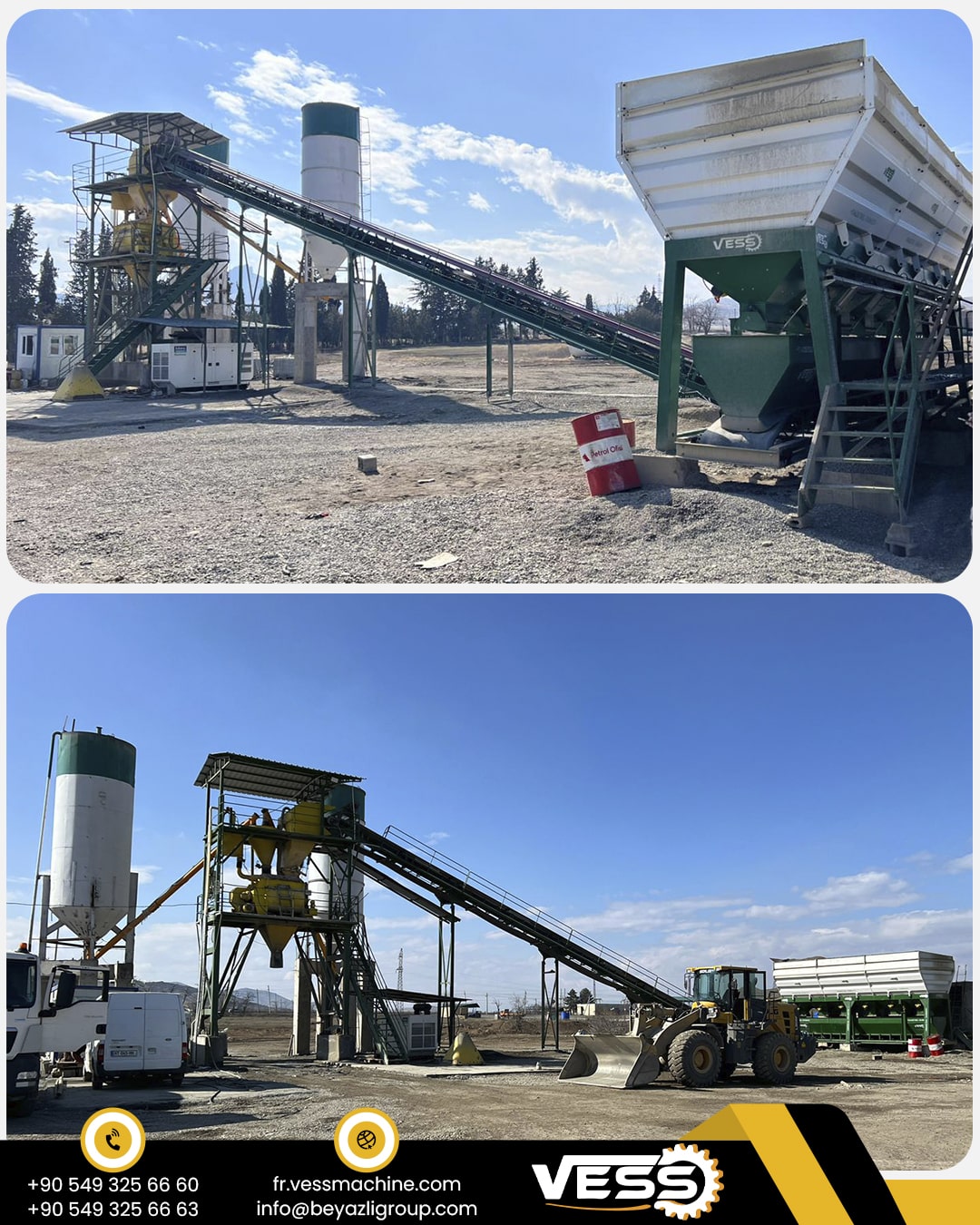
Beyazli Group manufactures high-quality VESS concrete batching plants in different capacities, selected according to the customer’s project.
We are a leading concrete batching plant manufacturer in Turkey and worldwide. Our machines are installed around the world, especially in the Middle East and Africa. We have representative offices in Mali and Georgia.
The smallest capacity of our Turkish concrete batching plants is 30 m³ per hour. VESS plants are automatic and designed for 24-hour operation. They mix sand, cement, water, gravel and crushed stone to produce ready-mix concrete. The mixing unit includes a measuring scale and agitation. Once mixed, concrete is loaded into mixer trucks and delivered to construction sites.
VESS Turkey concrete batching plants come with several opportunities we offer you:
- Free Delivery
- Free Installation
- Free Infrastructure Preparation Project
- Free Operator Training
- 3-Year Warranty
- 1-Year Warranty on the Mixer Wear Liner
- Powerful Italian Twinshaft-Planet Mixer
- Easy-to-Use Automation Software
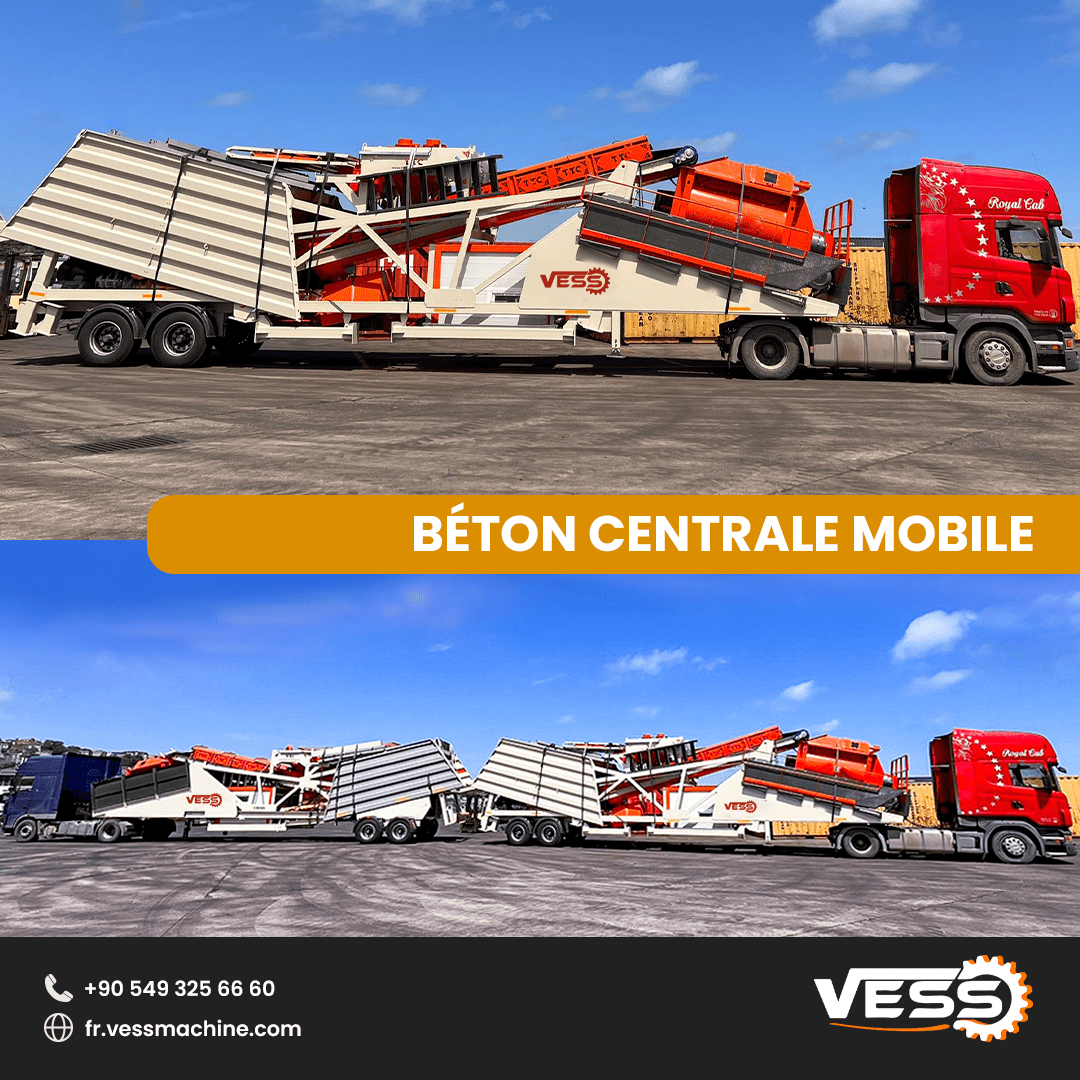
VESS Mobile Concrete Batching Plant
We manufacture stationary and mobile concrete batching plants in several capacities. Their clearest difference is mobility: a mobile plant can be conveniently transported to another project site, while a stationary plant remains fixed.
A mobile concrete batching plant is a ready-mix production unit that can move between sites. Its mobility reduces truck-mixer journeys and fuel costs. Its disadvantages are the continuing need for an effective installation and dismantling team, a power source and nearby raw-material supplies.
How Does a VESS Concrete Batching Plant Work?
A VESS Concrete Batching Plant operates through several stages that must follow a precise concrete production process.
Receiving materials
The first operating stage is receiving and storing the raw materials: sand, gravel, water and cement. These are kept in silos or bins to protect them from external contamination.
Dosing
After receipt, the raw materials are weighed and combined in precise proportions to produce a homogeneous concrete mixture. This dosing process can be carried out manually or by computer-controlled automated systems.
Mixing
The next stage combines the ingredients in a mixer, which may be horizontal or vertical depending on plant size. The process is designed to create a uniform mixture with every ingredient evenly distributed.
How to Choose the Right Concrete Batching Plant
The main selection criteria are output, meaning concrete volume per hour—30, 60, 100 or 160 cubic meters—and the installation’s dimensions. The required number and capacity of storage units such as silos and tanks should also be defined beforehand.
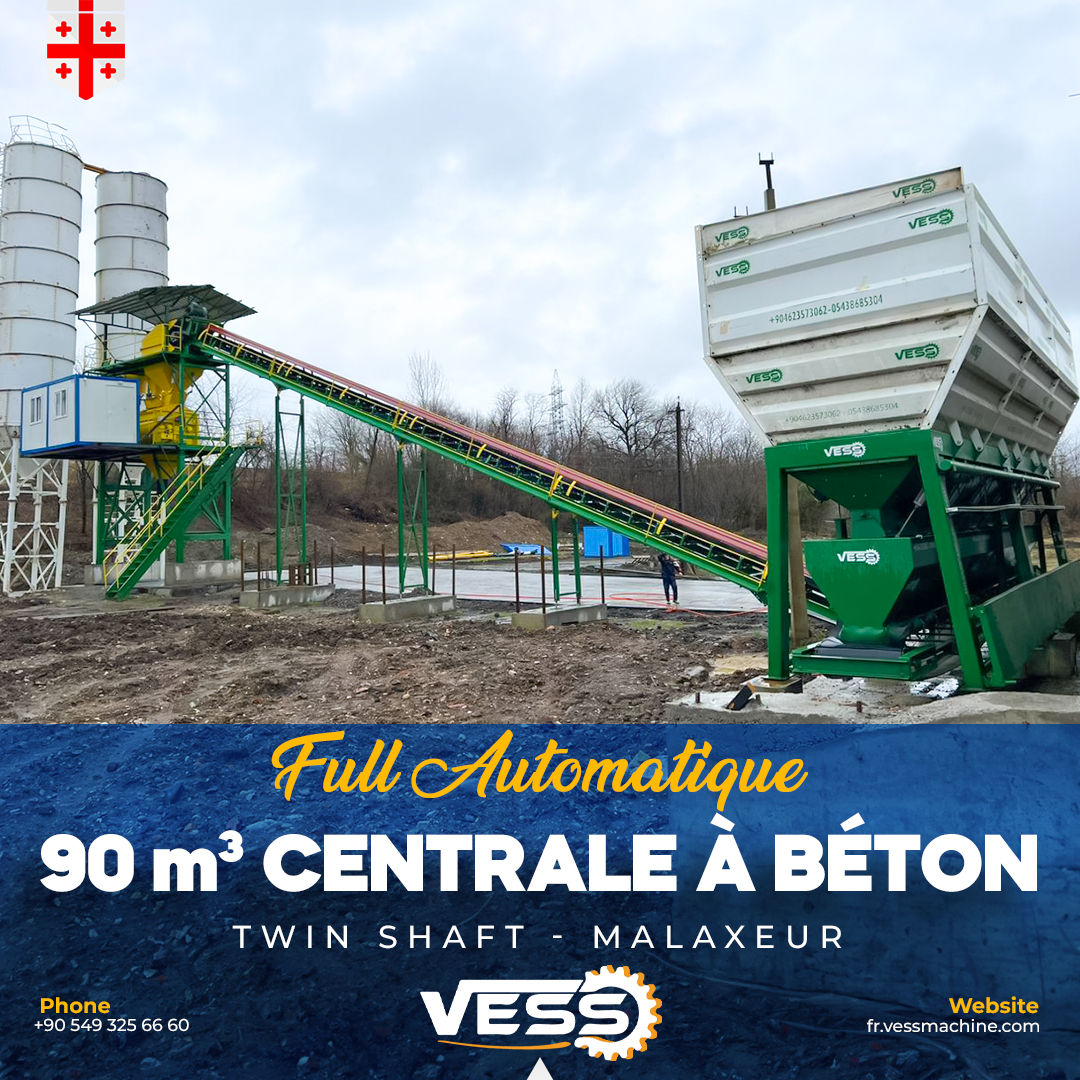
VESS Concrete Batching Plant
Stationary concrete batching plants and mobile plants differ mainly in mobility and installation. Their main differences are:
Stationary Concrete Batching Plant
- Permanent installation: stationary plants remain at a specific site and require solid foundations and fixed infrastructure.
- Production capacity: these plants generally offer higher output for large industrial projects and major construction sites.
- Maintenance and durability: these plants are designed for long-term use, with durable equipment and regular maintenance.
- Initial costs: installation and setup costs are higher because permanent foundations and infrastructure must be built.
- Precision and automation: they often provide more accurate component dosing and sophisticated automated production management.
Mobile Concrete Batching Plant
- Mobility: mobile plants are designed for easy transport between sites and are mounted on trailers or trucks.
- Fast installation: they can be installed quickly without specific foundations, making them ideal for temporary projects or moving construction sites.
- Flexibility: suitable for smaller projects or sites where mobility is important, including roads, bridges and temporary construction.
- Costs: initial costs may be lower, but vary according to relocation frequency and transport requirements.
- Production capacity: although generally lower than stationary plants, mobile plants efficiently supply small and medium-sized projects.
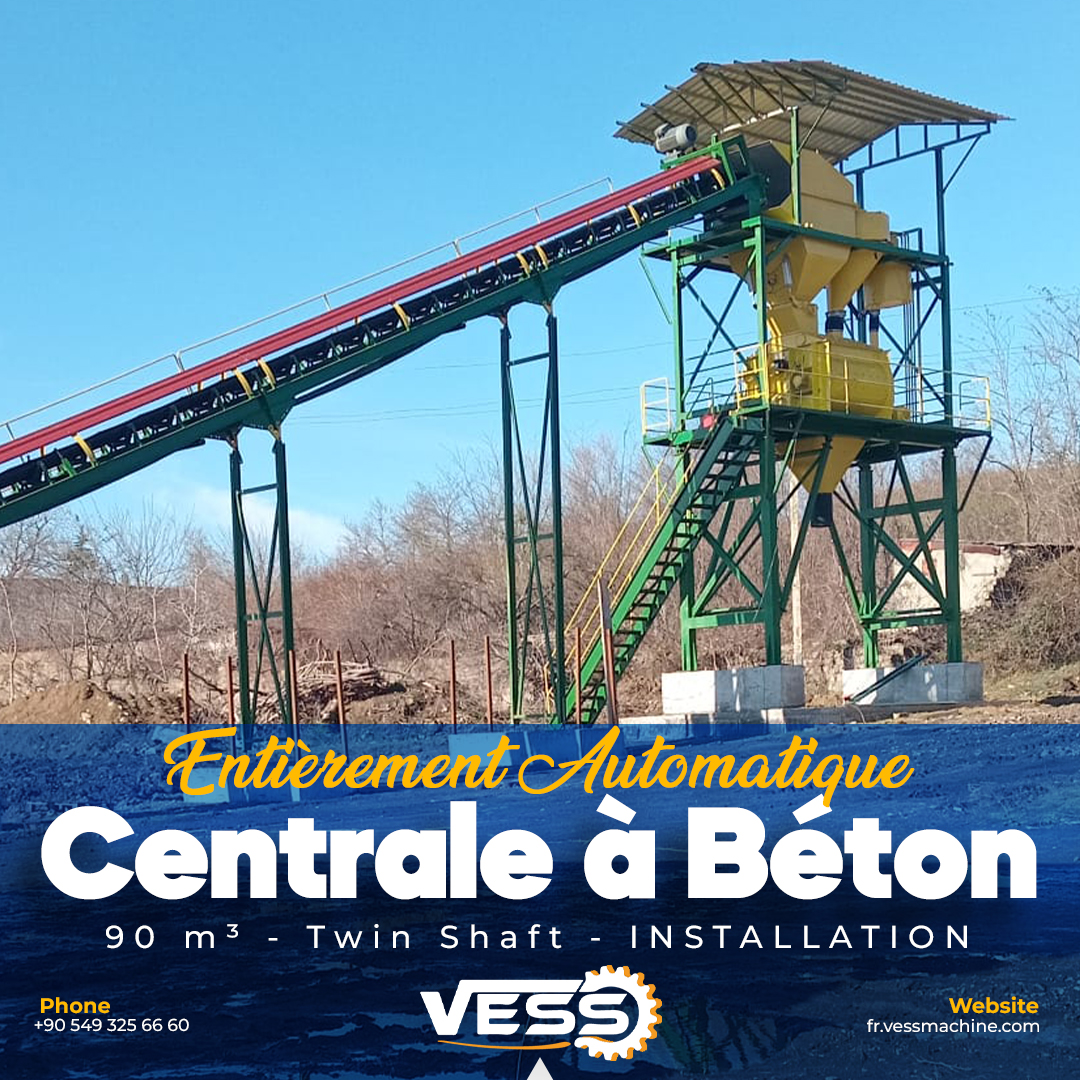
High-Capacity VESS Concrete Batching Plants
High-capacity concrete batching plants produce large quantities of ready-mix concrete for major projects such as bridges, dams, skyscrapers and other large infrastructure. Their key characteristics and information are outlined below:
- An advantage is that VESS concrete batching plants can produce hundreds of cubic meters of concrete per hour.
- High production volumes can reduce the cost per unit of concrete.
High-capacity batching plants play a crucial role in modern construction, enabling large projects to be completed efficiently and profitably.
Examples of Use
Major infrastructure projects:
Construction of bridges, tunnels, dams and other major public infrastructure.
Residential and commercial projects:
Development of residential complexes, shopping centers and office buildings.
Industrial projects:
Construction of factories, power stations and other industrial facilities.
Share a question, add your experience, or continue the discussion about this topic.