
Archive article: This is an English translation of the source article dated 2019. Prices, promotions, statistics and specifications reflect the source period. Please contact us for a current quotation.
Concrete is a strong, hard construction material made from aggregate or gravel, water and cement, mixed to form a cohesive mass. Concrete has been known since ancient times, and its invention is attributed to Joseph Aspdin in 1824, when he burned clay and claystone and mixed them to create what is now known as cement. The Fata Temple in Tivoli still stands today as evidence of concrete’s ancient use.
Concrete is a strong, solid material used in construction. It consists of aggregate or gravel, water and cement, mixed to form a cohesive mass. Concrete has been known since ancient times, and its invention is attributed to Joseph Aspdin in 1824, when he burned clay and claystone and mixed them to create what is now known as cement. The Fta Temple in Tivoli still stands today as evidence of concrete’s ancient use. Concrete is an artificial rock made by mixing materials in specified proportions. A concrete batching plant mixes them into a viscous paste, which is poured into steel or wooden formwork, takes its shape and is sprayed with water. Once it has dried and hardened, the formwork is removed, leaving the mixture as hard as stone. Concrete forms many structural elements, including beams, columns, slabs and foundations. Ready-mix concrete is flexible in its fresh state, taking the shape of its formwork and giving design engineers broad freedom in shaping structures. Concrete also offers high weather resistance, withstanding summer heat and, to some extent, winter frost. It is highly watertight and protects reinforcing steel from rust.
Concrete is classified by use as follows:
- Ordinary reinforced concrete: used for load-bearing concrete elements such as columns, beams and slabs.
- Concrete for hydraulic structures: used in dams and canal linings.
- Concrete for floors and road surfacing.
- Special Concrete: This concrete resists acids and heat and is very heavy. Extra-heavy concrete is made using cement and special aggregates with high bulk density.
These ready-mix concrete types are manufactured in batching plants by mixing several materials. Their proportions are selected according to the required work and available materials. Ready-mix concrete is a building material whose performance and properties vary considerably with the mixture’s ingredients, its use and other factors. Fresh concrete is pliable, allowing workers to pour it into the required formwork before it hardens and becomes strong. Its many types differ according to their ingredient proportions.
✔️ Ready-mix concrete ingredients
The word “concrete” means “grow together,” which is exactly what happens when the following three ready-mix concrete ingredients are combined:
-
Aggregate forms 60 to 70% of the mix and combines coarse and fine material: sand, gravel and large pieces of crushed stone.
-
Cement, another name for calcium and aluminum silicates, accounts for 10 to 15%. It is one of the most important ingredients in the concrete mixture, giving concrete its strength and durability.
-
Water makes up 15 to 20%. This essential liquid starts the chemical reaction when it comes into contact with cement.
- Admixtures are solid or liquid chemicals added to ready-mix concrete before or during production. The most commonly used admixtures improve the durability of hardened concrete or reduce its water content in an effort to shorten setting times.
These simple ingredients are combined by hand or in batching plants to form a homogeneous mixture called ready-mix concrete.
✔️ Ready-Mix Concrete Plant Project
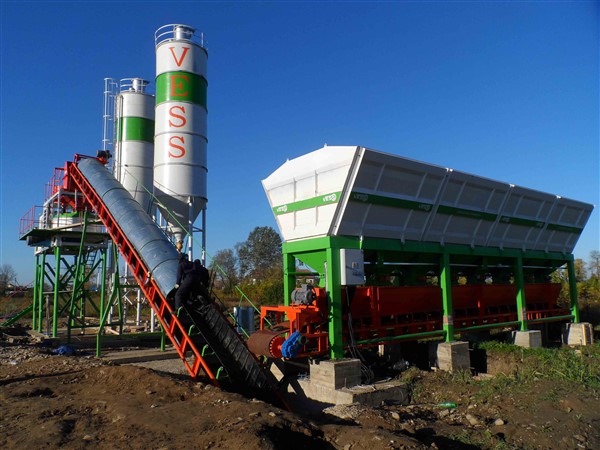
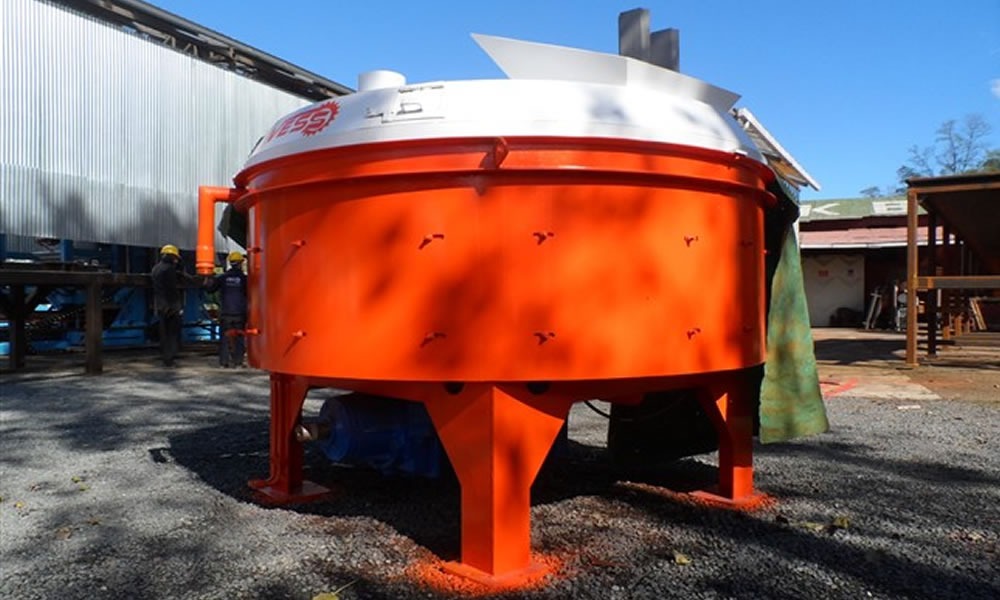
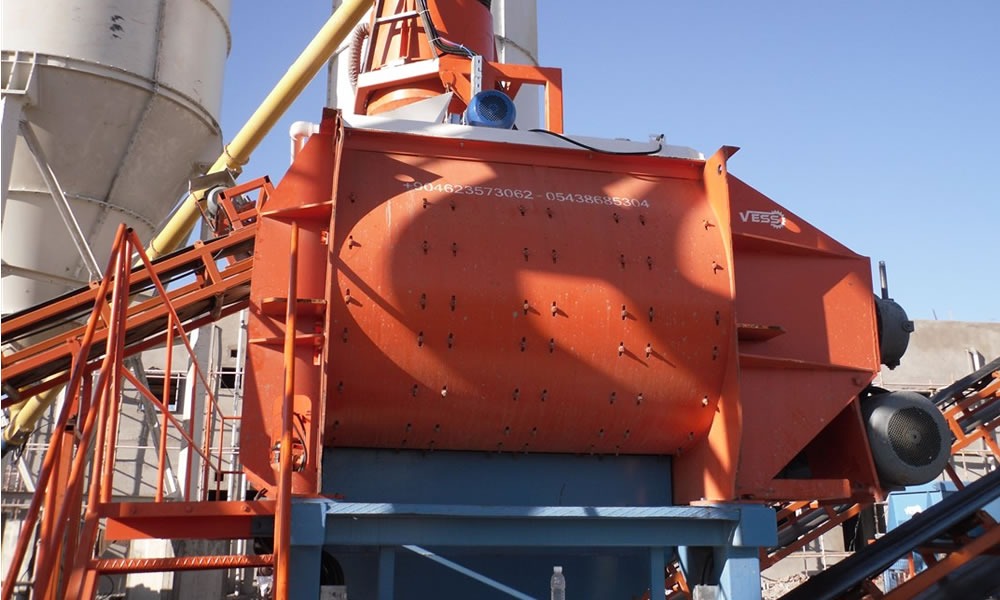
The idea of establishing a ready-mix concrete plant comes from growing demand for concrete and cement products, alongside enormous industrial and housing growth. Urban development requires ready-mix concrete, increasing demand for concrete batching plant projects. The availability of the necessary raw materials—cement, sand, crushed stone and other additives—has helped this industry become established and expand. A concrete plant project aims to meet the country’s requirements and needs arising from extensive urban development worldwide. Its customers include contracting companies, real estate investment companies, contractors and municipalities. When starting this business and producing ready-mix concrete, reliable, high-quality mixing equipment must be selected to ensure good output. This equipment includes raw material hoppers, cement silos, conveyors, mixers and other components. Modern fully automatic concrete batching plants have become widespread, using scales to determine ingredient proportions and ensure high-quality production with accurate ratios. The most important component in a ready-mix concrete plant is the mixer, which combines weighed raw materials and water into the homogeneous mixture known as ready-mix concrete. Several types of concrete mixers are available.
 |
 |
✔️ Ready-mix concrete plant for sale
BEYAZLI GROUP was established in 2007 to manufacture block machines, paving block machines and concrete batching plants. It quickly became one of Turkey’s leading manufacturers of concrete block machines and ready-mix concrete plants, with products representing strength, innovation and reliability. By using the latest technologies, our company can fulfill its promises and achieve its goals. Our production lines offer a wide range of scientifically engineered, modern products meeting needs across construction and development. A team of specialized personnel and engineers manufactures equipment to meet every customer requirement. Among the company’s products are fully automatic concrete batching plants with capacities selected according to customer requirements. We manufacture a complete ready-mix concrete plant for sale with all production equipment. Customers can add or remove any item as requested, with prices competitive for the equipment quality. The equipment is shown below:
Concrete Batching Plant Equipment
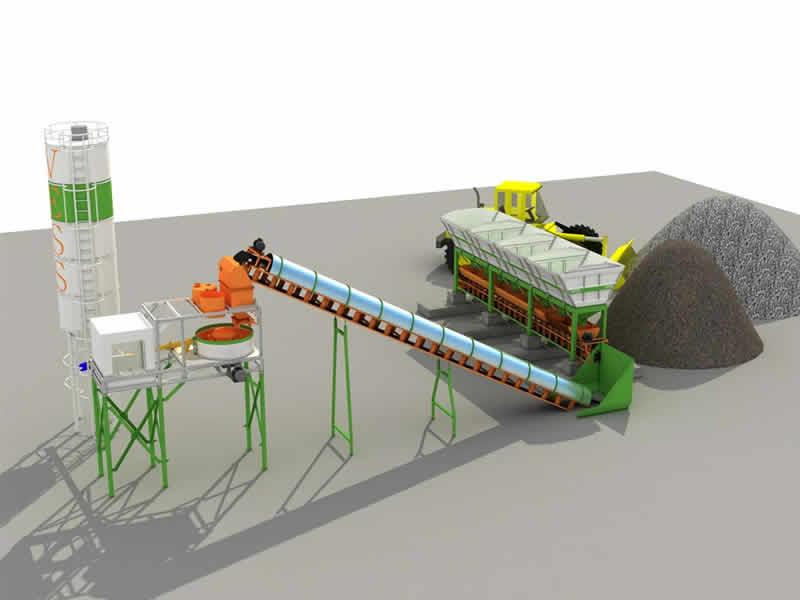 |
– Raw material hopper. |
|
– Conveyor beneath the hopper for weighing materials. |
|
|
– Conveyor carrying raw materials from the hopper to the mixer. |
|
|
– Cement silo and a pipe to transport cement from the silo to the mixer. |
|
|
– Dedicated mixer for combining the materials into a homogeneous mixture. |
|
|
– A weighing system for cement and water. |
|
|
– Electronic control panels and control room. |
|
|
– Air pump to help open and close the hopper gate. |
✔️ Concrete Mixer
Concrete is one of the most widely used construction materials. Its ability to withstand environmental conditions makes it an ideal choice for construction work, including from an economic standpoint. As explained earlier, ready-mix concrete contains several ingredients, combined in a concrete mixer or concrete batching plant. Before mixing these ingredients, the following points must be considered:
- Ensure that sand is free of adhering organic matter by screening it and washing it with water before use. High proportions of clay, organic matter, salts or phosphates in concrete cause its reinforcing steel to corrode and rust, weakening it.
- Use clean water free of salts and other materials.
- Determine ingredient proportions according to the required specifications. Mix proportions are among the most important factors affecting concrete quality.
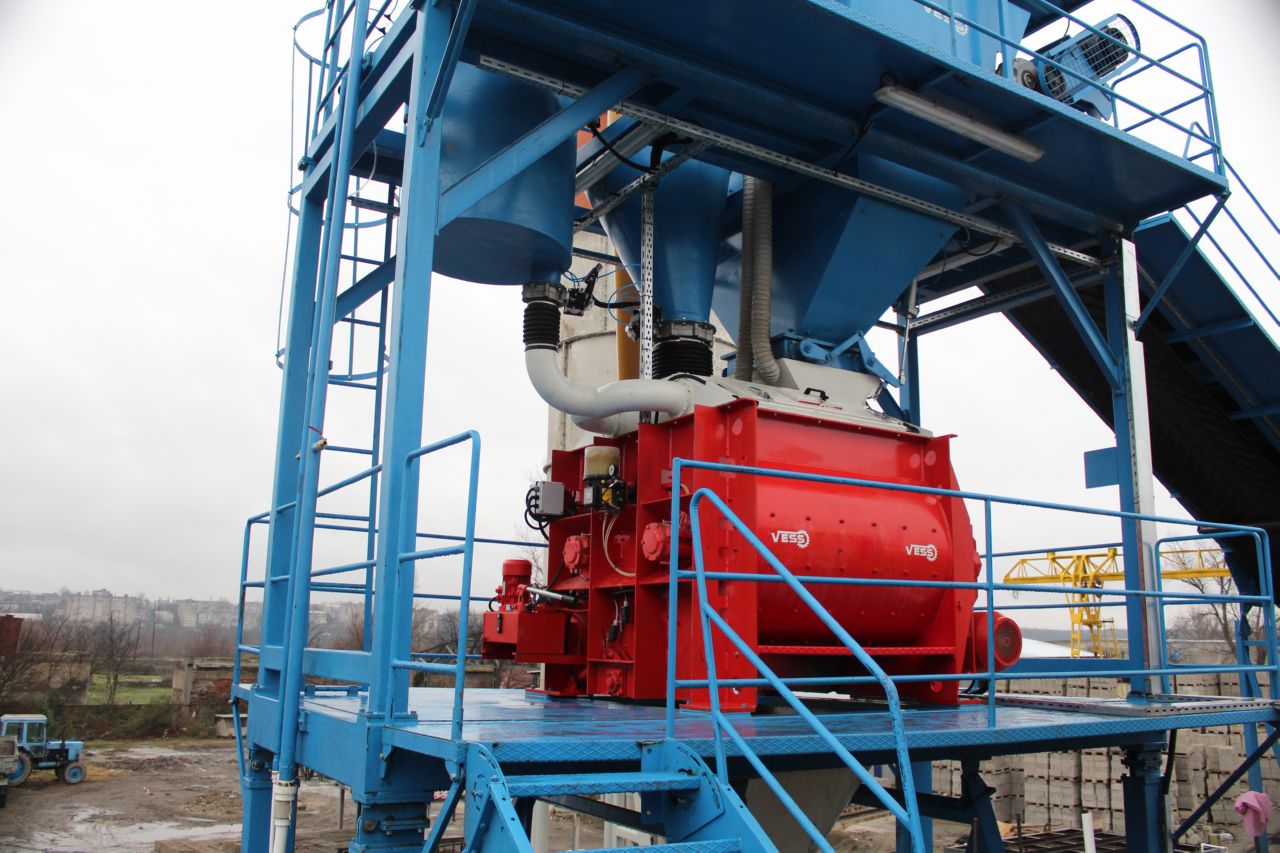
Concrete ingredients are mixed in two main ways:
-
Manual concrete mixing
After cleaning the sand and gravel, store them in a suitable place on site away from moisture. Small quantities of concrete can be mixed manually using a shovel.
-
Mechanical Concrete Mixing
Mechanical concrete mixing on site: concrete is mixed mechanically in the required proportions using mixers of suitable capacity, matched to the rate of transport and pouring. The number of mixers used on site depends on the type and nature of the work and the volume of concrete required. Concrete may also be prepared automatically at dedicated facilities known as ready-mix concrete plants, then transported to the site in equipped concrete mixer trucks. Mixing in concrete batching plants is performed in two ways:
- Central mixing: concrete is mixed and prepared at a batching plant, usually located near the project site.
- Mixing during transport: concrete ingredients are combined without water in the central mixer, as in central mixing, but water is added in the mixer truck either while traveling to the site or immediately before pouring.
✔️ Concrete batching plant
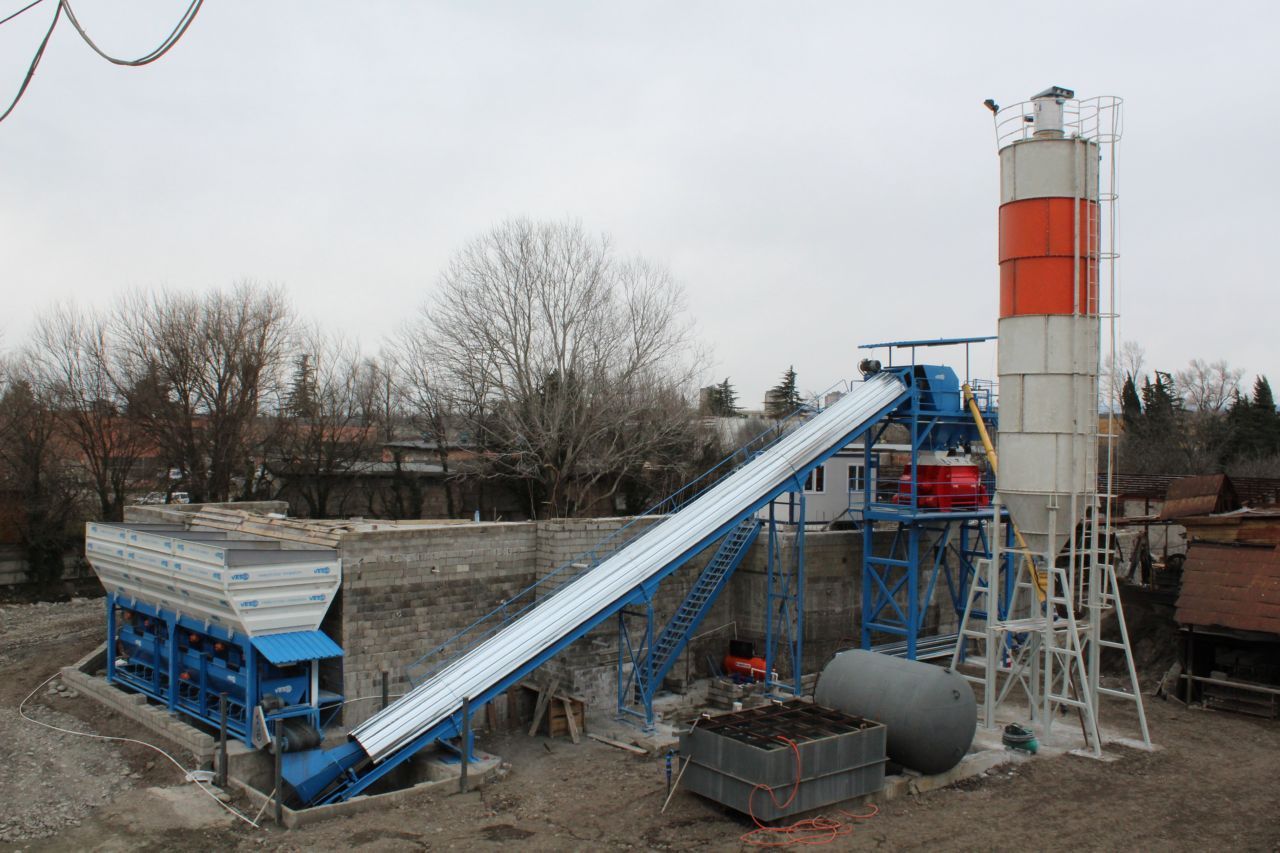
Concrete is one of the world’s most widely used manufactured materials. It is strong, versatile and can be cast into almost any shape. It can flow like water into smooth curves, depending on the mix ingredients and mixing method. Concrete production requires advanced engineering expertise developed through experiments and research. Its properties depend entirely on selecting ingredients and their proportions, mixing them correctly, and transporting, pouring and finishing the concrete properly. To obtain excellent concrete, the company has designed a stationary fully automatic concrete batching plant with scales for the required raw materials, cement and water. Everything is controlled automatically through the control panel, ensuring consistent proportions quickly and easily. Beyazli offers concrete batching plants with capacities from 30 m³/hour to 120 m³/hour, a two-year warranty against manufacturing defects, free installation and free operator training.
✔️ Concrete batching plant prices:
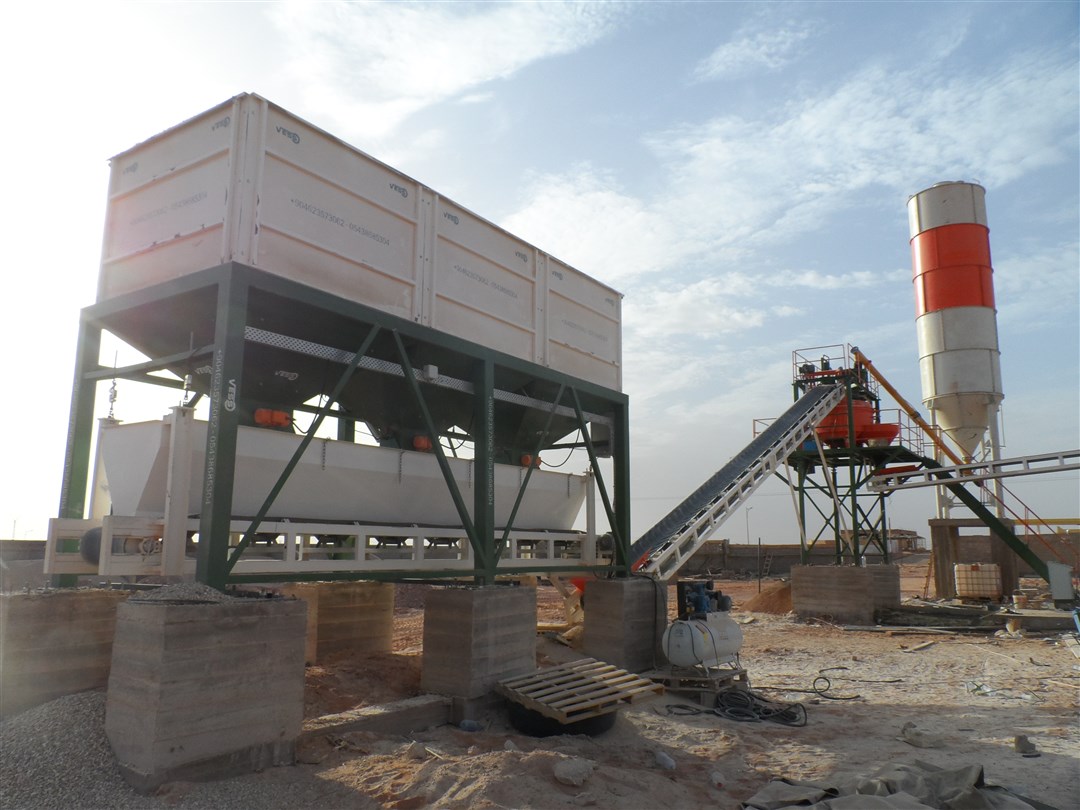
Stationary ready-mix concrete plant prices vary with production capacity: higher output means a higher price. Equipment also determines the cost. Beyazli offers a complete ready-mix concrete plant for sale with everything needed to produce concrete, and customers can add or remove any item. The price agreed for the concrete plant includes installation, operator training and operating certificates free of charge. The table below shows some concrete batching plant prices:
Concrete batching plant prices |
|||||
|
Production capacity |
30 m³/h |
45 m³/hour |
60 m³/hour |
100 m³/hour |
120 m³/h |
|
Price (euros) |
84.379 |
104.467 |
137.086 |
173.930 |
204.191 |
Share a question, add your experience, or continue the discussion about this topic.