
Archive article: This is an English translation of the source article dated 2024. Prices, promotions, statistics and specifications reflect the source period. Please contact us for a current quotation.
Stationary Concrete Batching Plant Details
Stationary Concrete Batching Plant Details
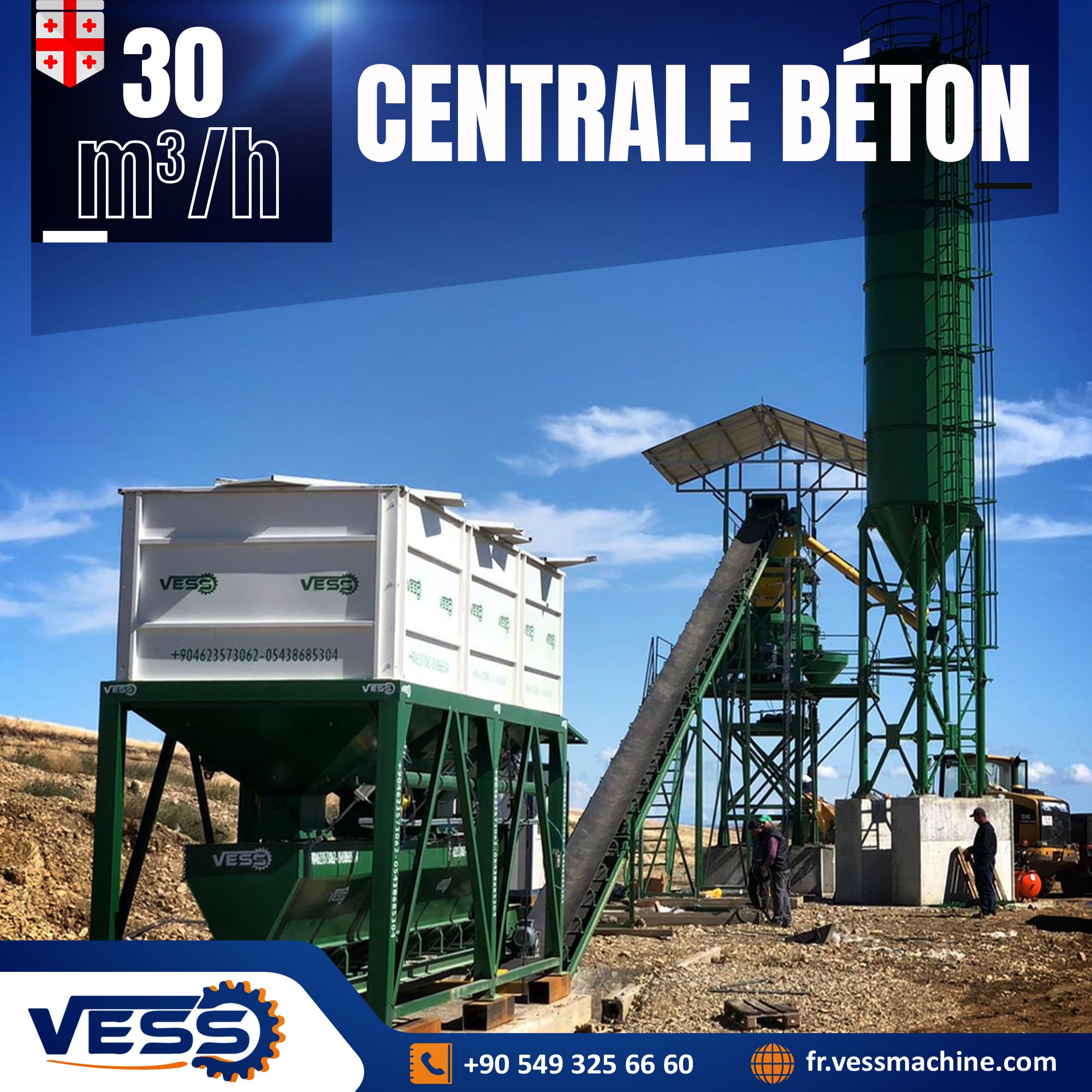
Beyazlı Group is an industrial company in Trabzon, Turkey, and a leader in new concrete batching plants and concrete brick, block and paving machines. Our machines have a 2-year warranty and 5 years of service. Installation and commissioning are free.
We work for customer satisfaction, improving our machines each year in response to feedback and difficulties customers have experienced.
VESS Concrete Batching Plant
A stationary concrete batching plant is an industrial concrete production facility. Unlike mobile plants, it stays in one location and produces large quantities for major projects such as buildings, roads, bridges and other infrastructure.
How to Choose the Right Concrete Batching Plant
Choosing a concrete batching plant requires considering several factors to match the specific needs of the site or company. The main points are:
1. Plant type
- Stationary plant: permanently installed, it is ideal for long-term projects or those requiring large concrete volumes.
- Mobile plant: easy to transport, it suits shorter projects or sites that change location.
2. Production capacity
- Choose capacity, measured in m³/hour, according to daily concrete requirements. A small plant may be sufficient for minor projects, while a large site will require higher output.
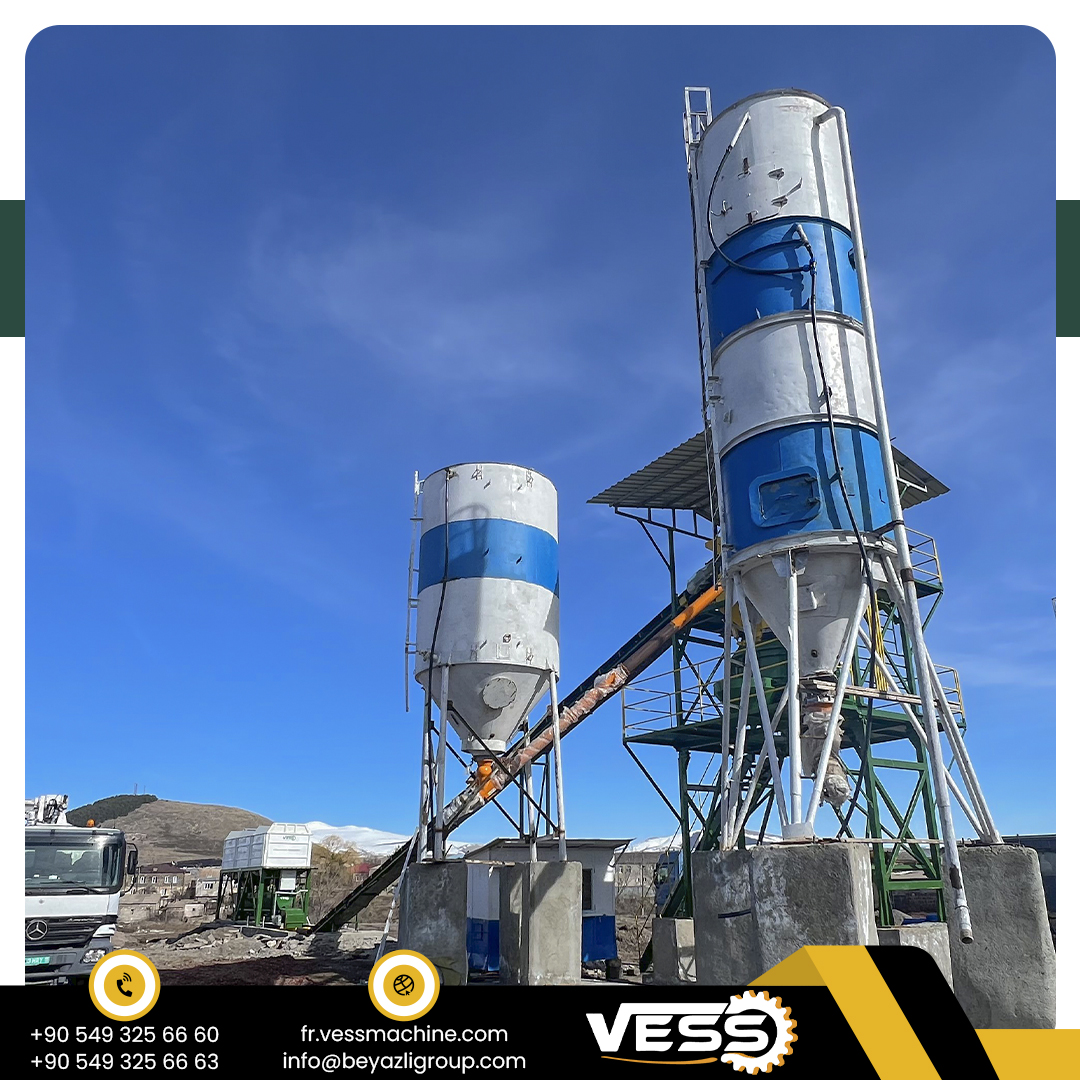
Main Features of a Stationary Concrete Batching Plant
-
High output: suitable for projects requiring a consistently large volume of concrete.
-
Stability and reliability: securely installed equipment delivers regular production with less risk of malfunction.
-
High-quality mixing: precise dosing and mixing-time control ensure concrete meets quality and composition standards.
-
Storage equipment: generally includes silos for cement, sand, gravel and other necessary additives.
Advantages
- Productivity: its capacity meets the needs of major sites without interruption.
- Economies of scale: production costs fall when large quantities are produced.
- Quality control: automated processes improve concrete quality through precise dosing.
Concrete Batching Plant Equipment
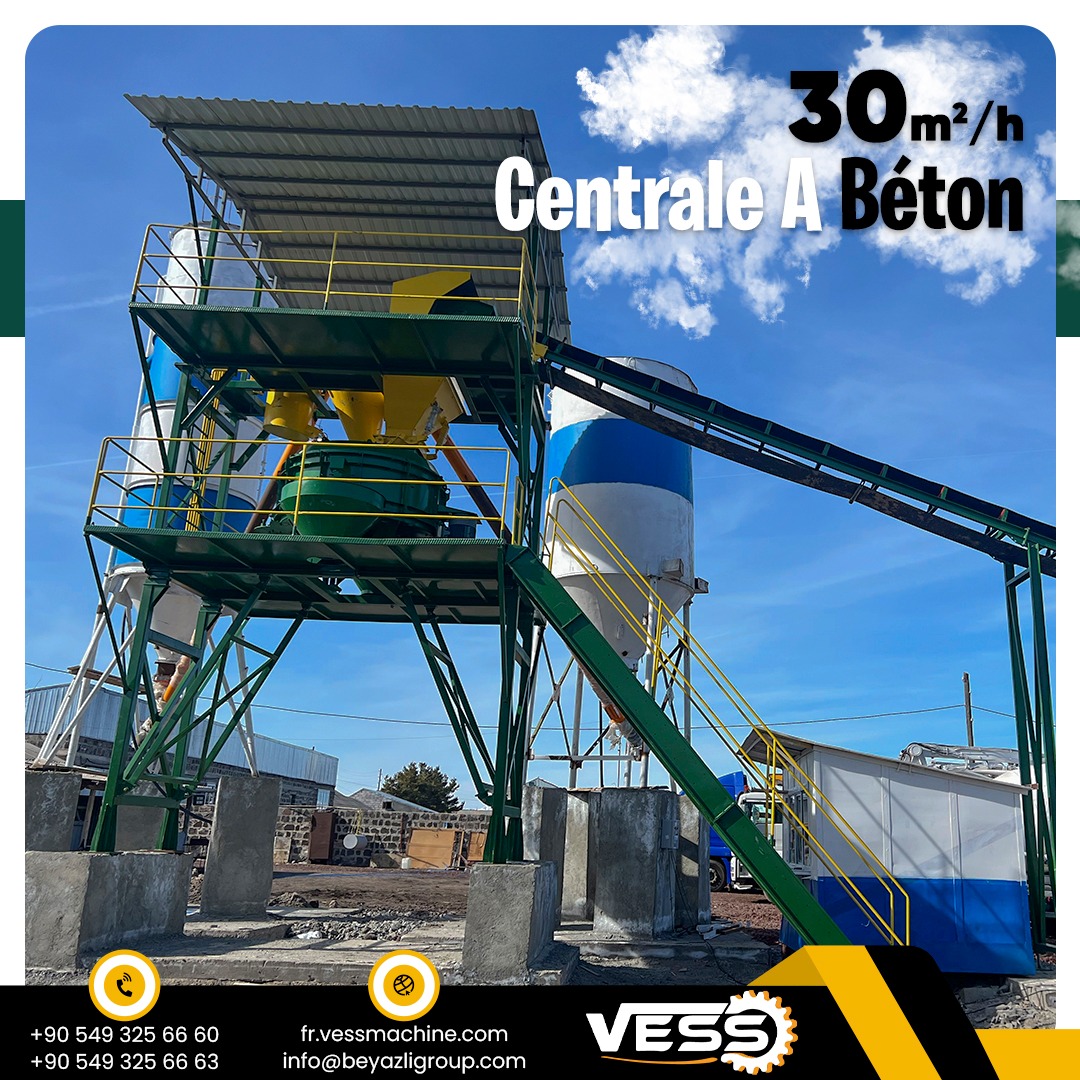
Mixer: the plant’s central component, where all ingredients are combined into concrete.
Aggregate hoppers: they hold different aggregates, such as sand and gravel, and feed them into the mixing system as needed.
Cement silos: store large quantities of cement. They are generally vertical cylinders providing good storage capacity. A screw conveyor feeds cement to the mixer for precise dosing.
Aggregate dosing or weighing system: used in construction, civil engineering and concrete production, this equipment accurately weighs and doses granular materials such as sand, gravel and stones for specific mixes.
Aggregate conveyor belt: a material-handling system that transports sand, gravel and stones over short or long distances.
What Is the Difference Between Mobile and Stationary Concrete Batching Plants?
Mobile and stationary batching plants both produce concrete but mainly differ in mobility. Their principal differences are:
Mobile Concrete Batching Plant
- Mobility:
- Its wheeled or transportable chassis makes it easy to move between sites.
- Ideal for temporary sites or projects requiring frequent relocation.
Stationary Concrete Batching Plant
- Mobility:
- Designed to remain in place permanently or for long periods.
- Unsuitable for frequent relocation.
Share a question, add your experience, or continue the discussion about this topic.