
Archive article: This is an English translation of the source article dated 2020. Prices, promotions, statistics and specifications reflect the source period. Please contact us for a current quotation.
Concrete blocks are widely used in buildings around the world, and the number of factories has increased considerably in recent years. Construction has received support and encouragement in many countries because it helps establish the infrastructure of civil facilities. Concrete blocks are among the most commonly used building materials because they are inexpensive, their raw materials are readily available and they are easy to manufacture. Producing or building with them does not require a high level of skill. They are therefore used in most architectural and construction work, including external and internal walls and hollow-block floor systems. Growing demand has increased both the number of block making machines and their production capacities. It is therefore necessary to maintain, expand and develop this industrial resource by improving efficiency and quality.
Concrete blocks are widely used in buildings around the world, and the number of factories has increased considerably in recent years. Construction has received support and encouragement in many countries because it helps establish the infrastructure of civil facilities. Concrete blocks are among the most commonly used building materials because they are inexpensive, their raw materials are readily available and they are easy to manufacture. Producing or building with them does not require a high level of skill. They are therefore used in most architectural and construction work, including external and internal walls and hollow-block floor systems. Growing demand has increased both the number of block making machines and their production capacities. It is therefore necessary to maintain, expand and develop this industrial resource by improving efficiency and quality.
 |
 |
♦ Types of Concrete Blocks:
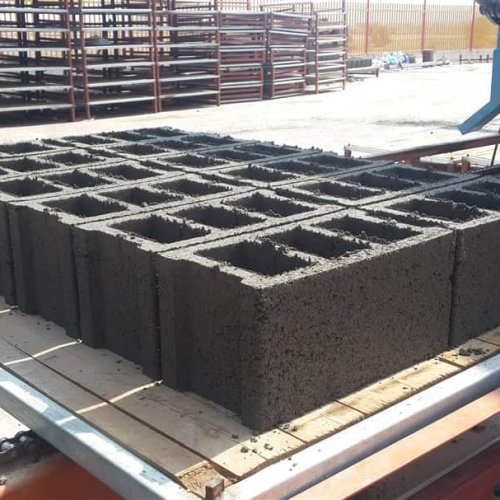
Blocks are classified according to their use. They have regular shapes and flat faces, are free from defects and cracks, and have a rough surface that allows mortar and coatings to adhere. Building blocks are among the most important construction materials and fall into two main types: hollow blocks and solid blocks.
-
Solid blocks contain no internal voids. They are usually used in substructures and foundations and have very high strength and durability. They have greater load-bearing and load-transfer capacity than hollow blocks, but are heavier.
-
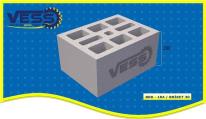
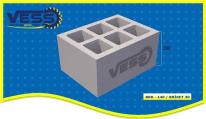
Hollow blocks contain voids or holes formed during pressing in block manufacturing machines. They fall into two types:
- Lightweight hollow blocks: These blocks are very light relative to their mix and compaction. Because of their high price, they are used in special situations.
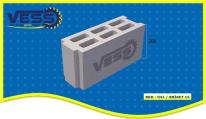
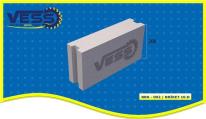
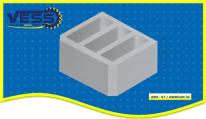
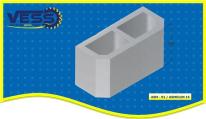
- Ordinary hollow blocks are divided into several types: size 20 blocks are used for external walls or architectural applications; size 15 blocks for external and internal walls; size 12 blocks for internal partitions; and size 10 blocks for internal partitions.
 |
 |
 |
 |
 |
 |
 |
 |
♦ Concrete brick plant:
Concrete blocks are manufactured in a block plant and must be strong and high-quality. Production involves several stages:
- Selecting ingredients: These blocks are produced by mixing several materials, chiefly cement, water, sand and gravel.
- Mixing concrete ingredients: before placing ingredients in the mixer, their proportions must be checked against the exact specifications of the concrete blocks used in construction. Once the required quantities have been selected, they are placed in the block plant’s dedicated mixer. Its mixing arms thoroughly combine all ingredients into a cohesive mixture.
- Forming blocks: after mixing the materials into a cohesive mixture, it is poured into molds selected for the desired shape, size and specifications.
- Drying blocks: after pressing, the blocks are left to dry and watered, then sent to their place of use.
♦ Block production machine:
Blocks can be produced simply using ordinary mixers to combine sand, gravel, cement and water. Molds are filled and pressed manually, then the blocks dry and are kept moist with water for several days. Alternatively, advanced block manufacturing machines use mechanical equipment, weight-controlled dosing and central mixers. The molds are filled, the mixture is pressed and vibrated, and the molds are raised quickly, leaving the products to dry. These modern block machines differ in capacity and operating system, with semi-automatic and fully automatic options. Different capacities are available according to customer requests and needs. The machines produce all the block types mentioned above simply by changing molds.
The video below shows the concrete block factory equipment and how it operates:
Concrete brick machine for sale | Semi-automatic | VESS EKO 4.1
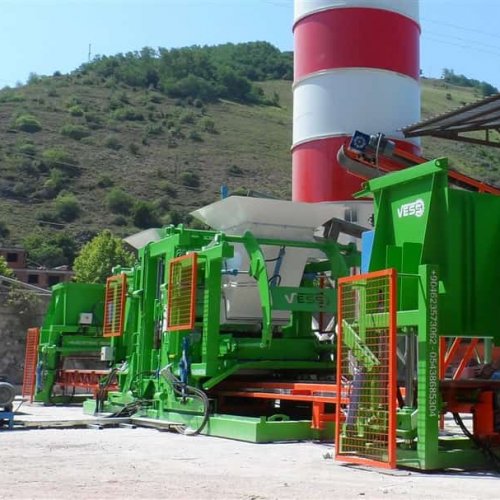
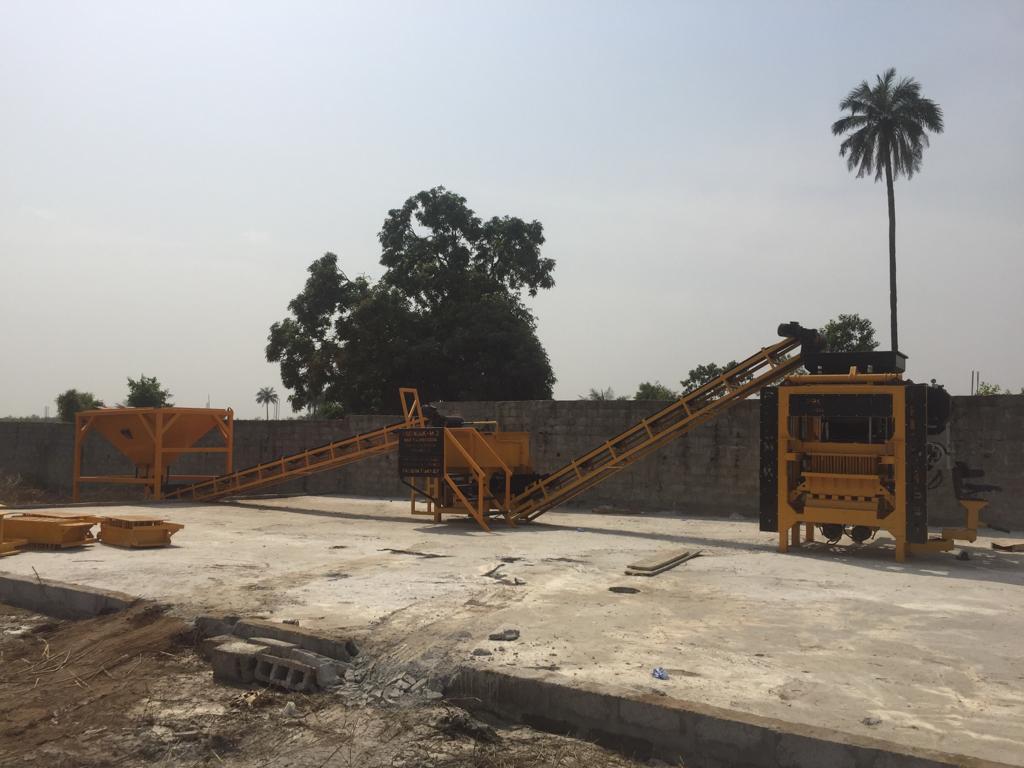
Beyazli Group manufactures various concrete block making machines, including a semi-automatic concrete block plant ideal for newcomers to this business. It is economical and competitively priced, with the following main advantages:
- Semi-automatic operating system.
- Pallets carrying the products are transported by handcarts.
- Output in 8 hours is 4,000 blocks measuring 20 × 40 × 20. Different sizes and shapes can be produced depending on the mold used.
- Designed for continuous 24-hour operation.
- Electronic equipment comes from German brands, while the remaining equipment is manufactured in Trabzon, Turkey.
- It requires few workers, reducing labor and wage costs.
- One of its main advantages is that it can be dismantled, moved to another location and reassembled easily.
- Low energy consumption.
- The same block machine can use different molds, including paving block and curbstone molds in shapes and sizes requested by the customer.
Automatic Block Plant | Block Plant Equipment | VESS
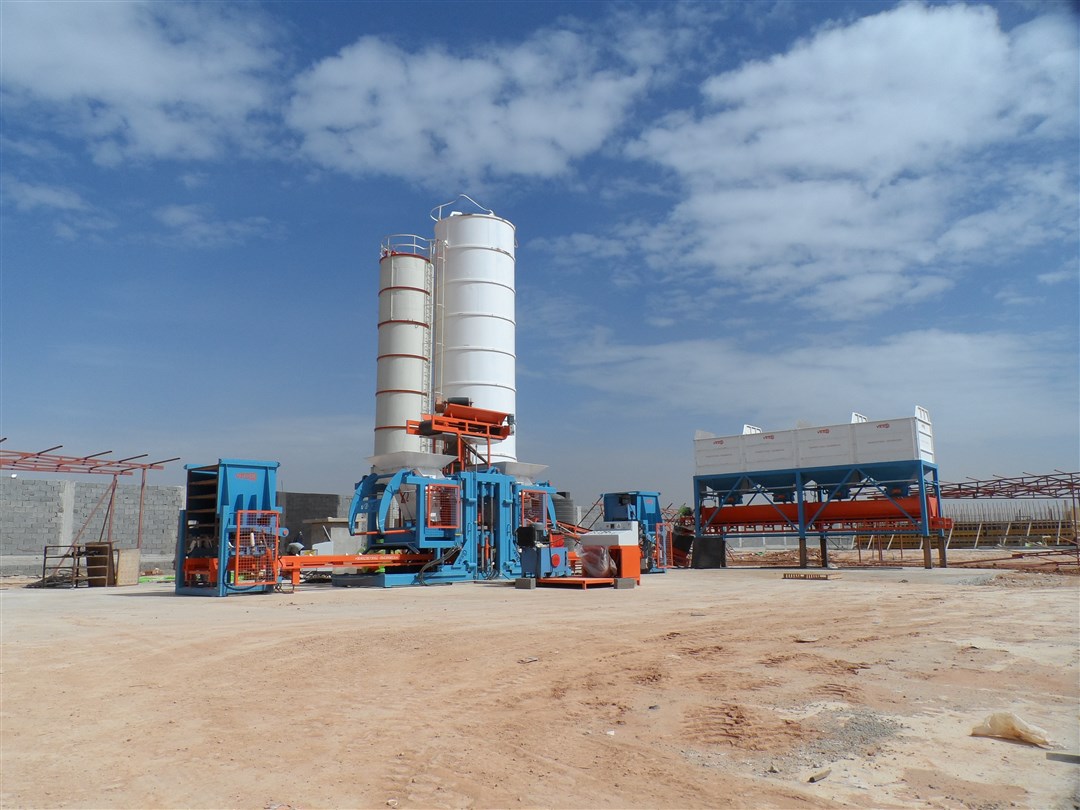
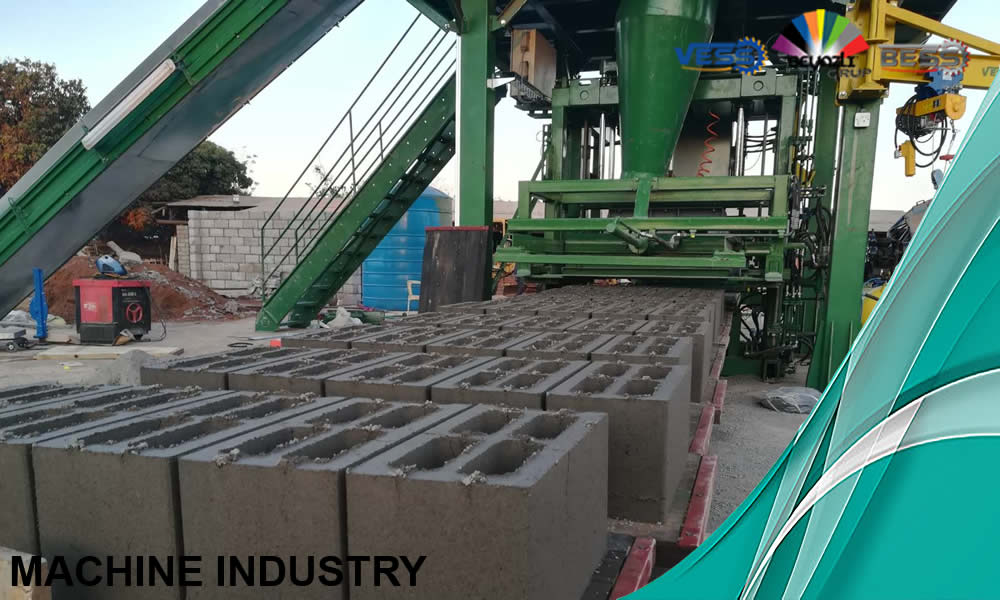
Ongoing development has increased demand for concrete blocks and other cement-based products. Ordinary manual block machines cannot meet all this demand, so an automatic block plant or a fully automatic plant is needed. Robots stack wooden pallets, which are then transferred by forklift, easing workers’ tasks and reducing labor requirements. A small workforce can operate the plant and obtain varied output. An automatic weighing system also ensures quality and precision in selecting production materials. BEYAZLI GROUP therefore manufactures VESS block machines with capacities ranging from 10000 blocks in 8 hours to 24000 blocks. Different operating systems support this high output, including automatic and fully automatic block machines and systems with an electronic forklift, making work and production easier. Block plants are designed as complete installations with all necessary block plant equipment: raw material hoppers, a cement silo, conveyors, a mixer, a block press, front and rear robots for stacking empty and loaded pallets, block molds in different shapes and dimensions, and other equipment that supports and simplifies production.
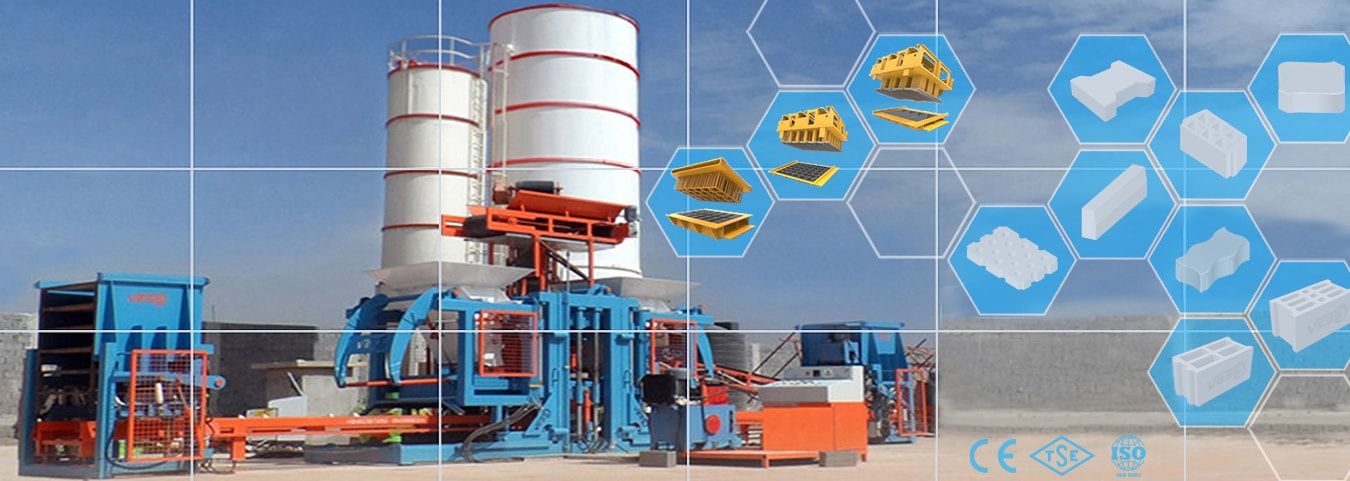
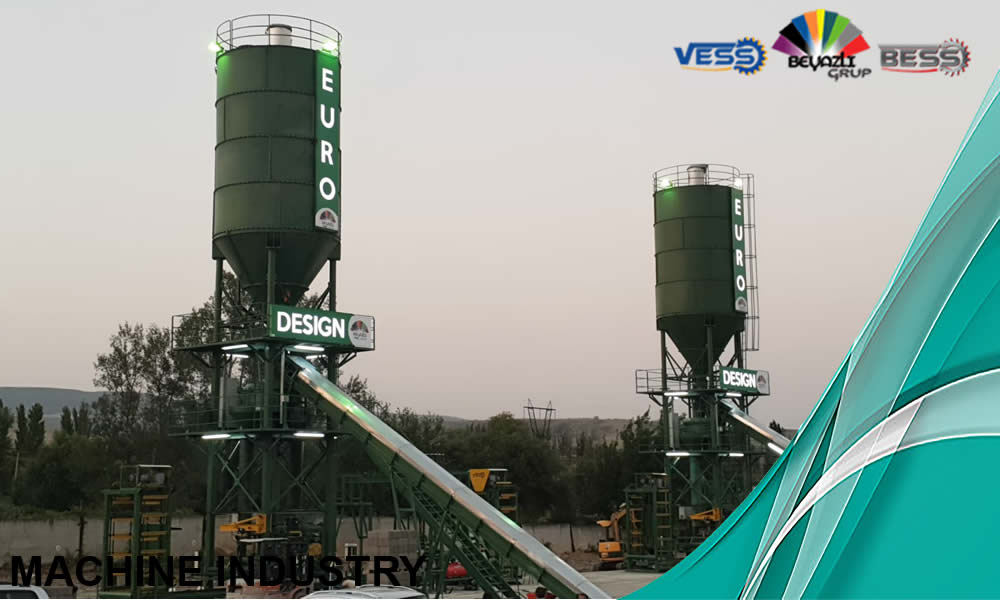
Block Making Machine and Concrete Batching Plant | COMPACT
The features of COMPACT concrete block machines have made production easier and brought major savings in electricity, space, infrastructure work and more. They combine a concrete block machine and concrete batching plant in one facility. Their main advantages include:
- High-quality equipment at an economical price.
- The stacked design requires little installation space, reducing infrastructure and assembly costs.
- It provides high, varied output. Simply changing molds allows it to produce hollow, solid, insulated and decorative concrete blocks, paving blocks, curbstones, garden wall products, tiles, chimney blocks, drainage channels and grass pavers in various shapes and sizes, as well as ready-mix concrete.
- Output in 8 hours is 5,000 size-20 concrete blocks or 400 m² of paving blocks, with 15 to 30 m³/hour of ready-mix concrete.
- These concrete block making machines can also be upgraded in stages from semi-automatic to fully automatic operation.
- Low electricity consumption.
- Control software is easy to use in any language requested by the customer.
- The block making machine can be dismantled, moved and reinstalled elsewhere easily because its components are designed to be taken apart and bolted back together.
 |
 |
♦ Concrete brick plant prices:
Concrete brick plant prices depend on the customer’s choices. Prices vary by machine type: mobile machines are priced differently from stationary models. They also vary by operating system—semi-automatic, automatic or fully automatic, as mentioned—and the equipment included in the plant. Customers can select the equipment themselves. For example, they can initially choose only the brick plant equipment required for production, then add equipment and upgrade their brick machines as the business develops. These choices determine the brick machine price. After agreement, the company prepares the necessary sales documents, signs and authenticates the contracts, recording all details, such as equipment, commercial terms, delivery dates and payment dates.
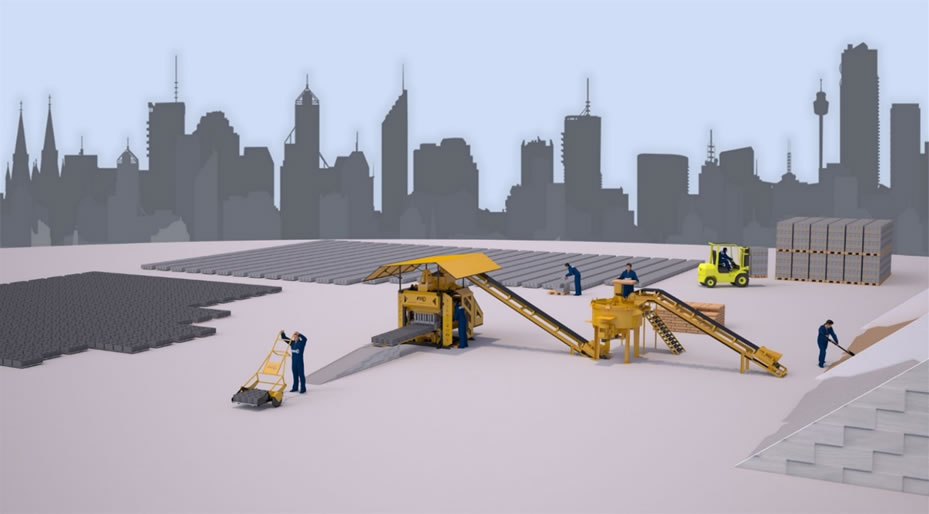
Once the concrete block plant is manufactured, its equipment is shipped to the customer’s chosen location. We provide free drawings and guidance for preparing the site, then send specialists to install and test the machine and train workers in operation and production. The company provides a two-year warranty against manufacturing defects and five years of after-sales service, responding as quickly as possible to any fault.

Share a question, add your experience, or continue the discussion about this topic.